

The French Riviera’s turquoise bays, long a magnet for the world’s most glamorous superyachts and cruise liners, are entering a new era of regulation. Seeking a balance between tourism, local life, and environmental stewardship, the Prefect of the Alpes-Maritimes, Laurent Hottiaux, and the Maritime Prefect of the Mediterranean, Christophe Lucas, have unveiled a coordinated set of measures to govern the reception of cruise ships along the Côte d’Azur.
The announcement on Friday (10 October 2025), follows months of consultation with local authorities and industry stakeholders — including the municipalities of Cannes, Villefranche-sur-Mer, and Beaulieu-sur-Mer, as well as the Departmental Council, the Maritime Union 06, cruise line representatives (CLIA), and the Chamber of Commerce and Industry (CCI). A first round table, held on 11 July at the Alpes-Maritimes prefecture, set the stage for a shared diagnosis of the cruise industry’s impact — economic, environmental, and social — on the Riviera coastline.
A Harmonised Framework for the Riviera’s Ports
The new measures, which will take effect upon publication of a prefectural decree, aim to create clarity and fairness across the department’s ports, where cruise stopovers are often scheduled at least two years in advance. Key provisions include:
Passenger disembarkation limits:
- An average cap of 2,000 passengers per stopover per port.
- A strict maximum of 3,000 passengers per stopover per port.
Number of stopovers:
- Only one large ship (over 1,300 passengers) permitted per port, per day.
- In the peak months of July and August, a tighter limit of 15 cruise ships per month.
Environmental response measures:
- During pollution peaks, emissions must be reduced within 3 nautical miles of the coast (Level 1).
- In severe cases (Level 2), stopovers may be canceled altogether.
In addition, harbourmasters will be required to report any abnormal smoke emissions, with immediate corrective measures imposed under the updated ‘Sustainable Cruise in the Mediterranean’ charter.
Cruise lines adhering to that 2025 charter will also enjoy priority access for port authorizations — a move that rewards companies demonstrating concrete environmental commitments.
Balancing Tourism and Tranquility
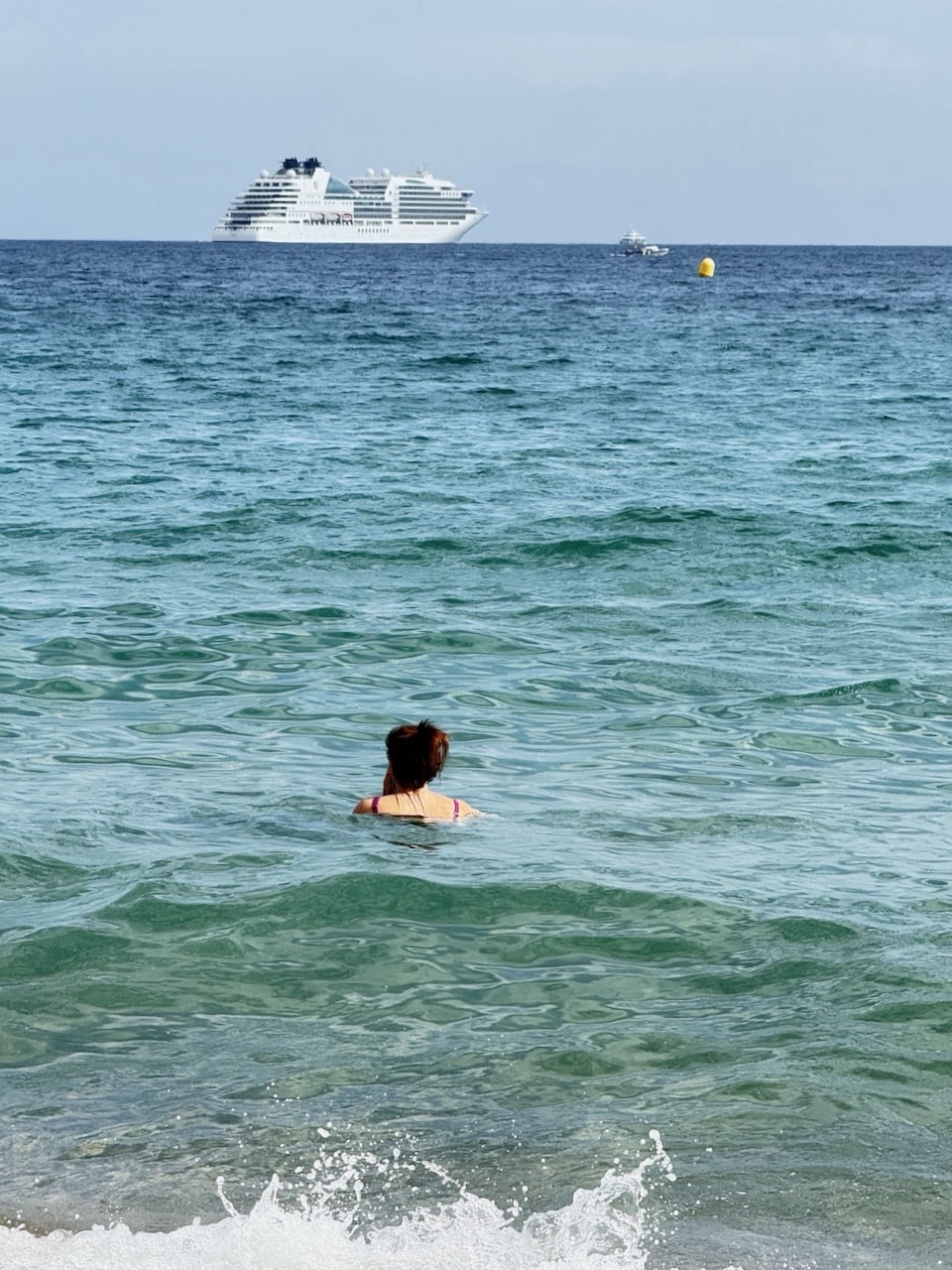
The Alpes-Maritimes department, home to some of Europe’s most picturesque coastal communities, welcomes a substantial number of cruise ships each year. While these arrivals contribute to the region’s tourism economy, they also bring challenges — from air quality concerns to congestion in narrow historic ports, the department said in a press release.
Hottiaux and Lucas emphasised that the new framework is designed to prevent a domino effect of port-hopping — where restrictions in one bay push ships to neighbouring harbors — and instead establish a coordinated, transparent policy across the entire coastline.
“We thank all the mayors and economic stakeholders for the spirit of responsibility they have shown in the collective interest of all,” said Hottiaux and Lucas in a joint statement. “Together, we share the concern to reconcile quality of life with economic development that respects the challenges of adapting to climate change.”
Public Consultation Open
The proposed measures will be subject to a 21-day public consultation, available electronically at www.alpes-maritimes.gouv.fr, in accordance with the French Environmental Code.
For now, the message from the Riviera’s authorities is clear: the Cote d’Azur coastline, which has inspired generations of artists and travellers, must remain not only dazzling, but sustainable too.

